Subject
Loading subject…
Loading articles and connected sources…
Loading articles and connected sources…
Places, landscapes and human environments
No articles in this subject yet.
Relevant records from public research, reference, imagery, and data sources. Each result links to its original source.
With more than 1,200 entries, Encyclopedia of Geography reflects how the growth of geography has propelled a demand for intermediaries between the abstract language of academia and the ordinary language of everyday life. The six volumes of this encyclopedia encapsulate a very diverse array of topics to offer a comprehensive and useful summary of the state of the discipline in the early 21st centur
Historical Geography and Geographical Thought · Geography Education and Pedagogy · Geography and Environmental StudiesView original sourceRonafd J. Johnston es un geógrafo de las nuevas generaciones y profesor en la Universidad de Sheffield, y que tiene rrna amplia e intensa investigación en Geografía cuantitativa (muestra de eflo es su fibro Mult.ivariateStatistical Analysis in Geography ... , f9l8) , un Guogruf eografÍa Politica {politicat, -bJF@ems, r97B y ceogra- phy and the State , 1982) , para recalar últimamente en fa Histori
Historical Geography and Geographical Thought · Geography Education and Pedagogy · Spatial and Cultural StudiesView original sourceAcknowledgements. 1. Feminism and Geography: An Introduction. 2. Women and Everyday Spaces. 3. No Place for Women?. 4. The Geographical Imagination: Knowledge and Critique. 5. Looking at Landscape: The Uneasy Pleasures of Power. 6. Spatial Divisions and Other Spaces: Production, Reproduction and Beyond. 7. A Politics of Paradoxical Space. Notes to Chapters.
Geography and Education Methods · Historical Geography and Geographical Thought · Spatial and Cultural StudiesView original sourceThe doing of material geographies within the subdiscipline of cultural geography has been inspired by Jane Bennett’s (2010) account of Vibrant Matter. This review follows the various trajectories in recently published research in the field of material geographies and argues that scholars should aim to embrace the call of matter to think politically and beyond the surface. The review argues that th
Spatial and Cultural Studies · Posthumanist Ethics and Activism · Historical Geography and Geographical ThoughtView original source
Earth observation taken during a day pass by the Expedition 43 crew aboard the International Space Station (ISS). Folder lists this as Persian Gulf.
Credit: Samantha CristoforettiView source item
Earth observation taken during a night pass by the Expedition 40 crew aboard the International Space Station (ISS). Folder lists this as: Earth Crescent. Sunrise.
Credit: Alex GerstView source item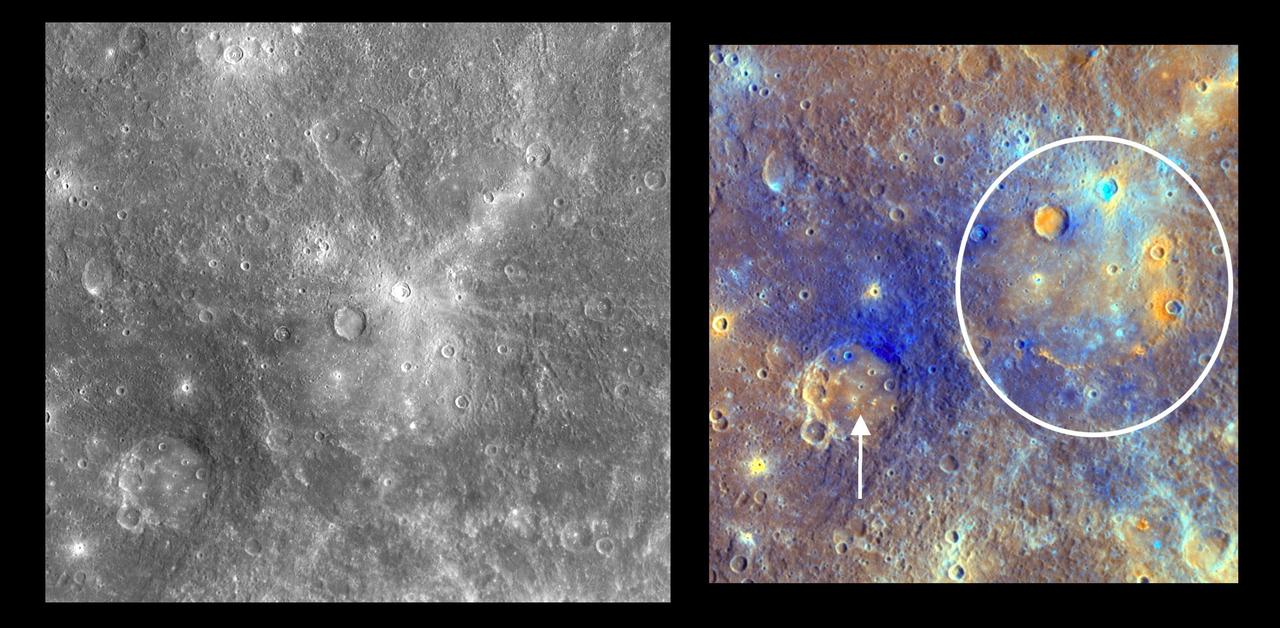
Dominici Colors Mercury Landscape
Credit: NASA/Johns Hopkins University Applied Physics Laboratory/Carnegie Institution of WashingtonView source item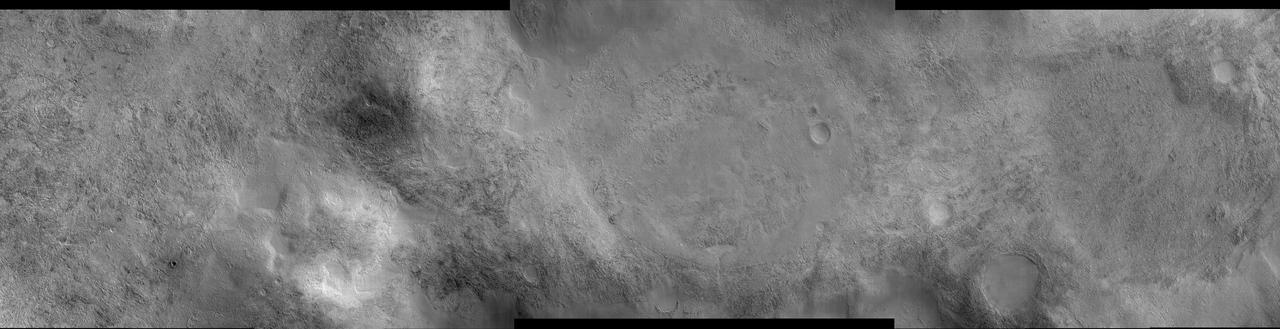
Landscape Northeast of Halley Crater
Credit: NASA/JPL/University of ArizonaView source itemGeography (from Ancient Greek γεωγραφία geōgraphía; combining gê 'Earth' and gráphō 'write', lit. 'Earth writing') is the study of the lands, features, inhabitants, and phenomena of planet Earth. Geography is an all-encompassing discipline that seeks an understanding of Earth and its human and natural complexities—not merely where objects are, but also how they have changed and come to be. While geography is specific to Earth, many concepts can be applied more broadly to other celestial bodies in the field of planetary science. Geography has been called "a bridge between natural science and social science disciplines." The history of geography as a discipline spans cultures and millennia, having been independently developed by multiple groups and cross-pollinated through trade between them. Geography as a discipline dates back to the earliest attempts to understand the world spatially, with the earliest example of an attempted world map dating to the 9th century BC in ancient Babylon. Origins of many of the concepts in geography can be traced to Greek Eratosthenes of Cyrene, who may have coined the term "geographia" (c. 276 BC – c. 195/194 BC). The first recorded use of the word γεωγραφία was as the title of a book by Greek scholar Claudius Ptolemy (100 – 170 AD). During the Middle Ages, geography was influenced by Islamic scholars, such as Muhammad al-Idrisi, who produced detailed maps of the world. The Age of Discovery was influential in the development of geography, as European explorers mapped the New World. Modern developments include geomatics and geographic information science. The core concepts of geography that are consistent across all approaches are space, place, time, and scale. Today, geography is an extremely broad discipline with multiple approaches and modalities. The main branches of geography are physical geography, human geography, and technical geography. Physical geography focuses on the natural environment, human geography on how humans interact with the Earth, and technical geography on developing tools for understanding geography. Techniques employed can generally be broken down into quantitative and qualitative approaches, with many studies taking mixed-methods approaches. Common techniques include cartography, remote sensing, interviews, and surveying.
License: CC BY-SA 4.0View original sourceIn physical geography and hydrology, a channel is a landform on which a relatively narrow body of water is situated, such as a river, river delta or strait. While channel typically refers to a natural formation, the cognate term canal denotes a similar artificial structure. Channels are important for the functionality of ports and other bodies of water used for navigability for shipping. Naturally, channels will change their depth and capacity due to erosion and deposition processes. Humans maintain navigable channels by dredging and other engineering processes. By extension, the term also applies to fluids other than water, e.g., lava channels. The term is also traditionally used to describe the waterless surface features on Venus.
science that studies the terrestrial surface, the societies that inhabit it and the territories, landscapes, places or regions that form it when interacting with each other
License: CC0View original sourcetext describing the history and geography of a country or landscape
Also known as: geographyLicense: CC0View original sourcegeographical treatise by Strabo
License: CC0View original source