Subject
Loading subject…
Loading articles and connected sources…
Loading articles and connected sources…
The natural world, from particles to ecosystems
No articles in this subject yet.
Relevant records from public research, reference, imagery, and data sources. Each result links to its original source.
What is the meaning of Life? what is science how does science explain the natural world? how does biology explain the living world? does science advance? how are the life sciences structured? What? questions - the study of biodiversity How? questions - the making of a new individual Why? questions - the evolution of organisms what questions does ecology ask? where do humans fit into evolution? can
Philosophy of Biology and Scientific Explanation · Evolution and Science Education · Science Education and PedagogyView original sourceAbstract unavailable. Metadata only.
Career Development and Diversity · History of Science and Medicine · Physics and Engineering Research ArticlesView original sourceWhen mathematician Hermann Weyl decided to write a book on philosophy, he faced what he referred to as conflicts of conscience--the objective nature of science, he felt, did not mesh easily with the incredulous, uncertain nature of philosophy. Yet the two disciplines were already intertwined. In Philosophy of Mathematics and Natural Science, Weyl examines how advances in philosophy were led by sci
History and Theory of Mathematics · Logic and Philosophy of Science · Philosophy of Biology and Scientific ExplanationView original sourceThe biology of the sticklebacks , The biology of the sticklebacks , مرکز فناوری اطلاعات و اطلاع رسانی کشاورزی
Fish Biology and Ecology Studies · Animal Behavior and Reproduction · Ichthyology and Marine BiologyView original source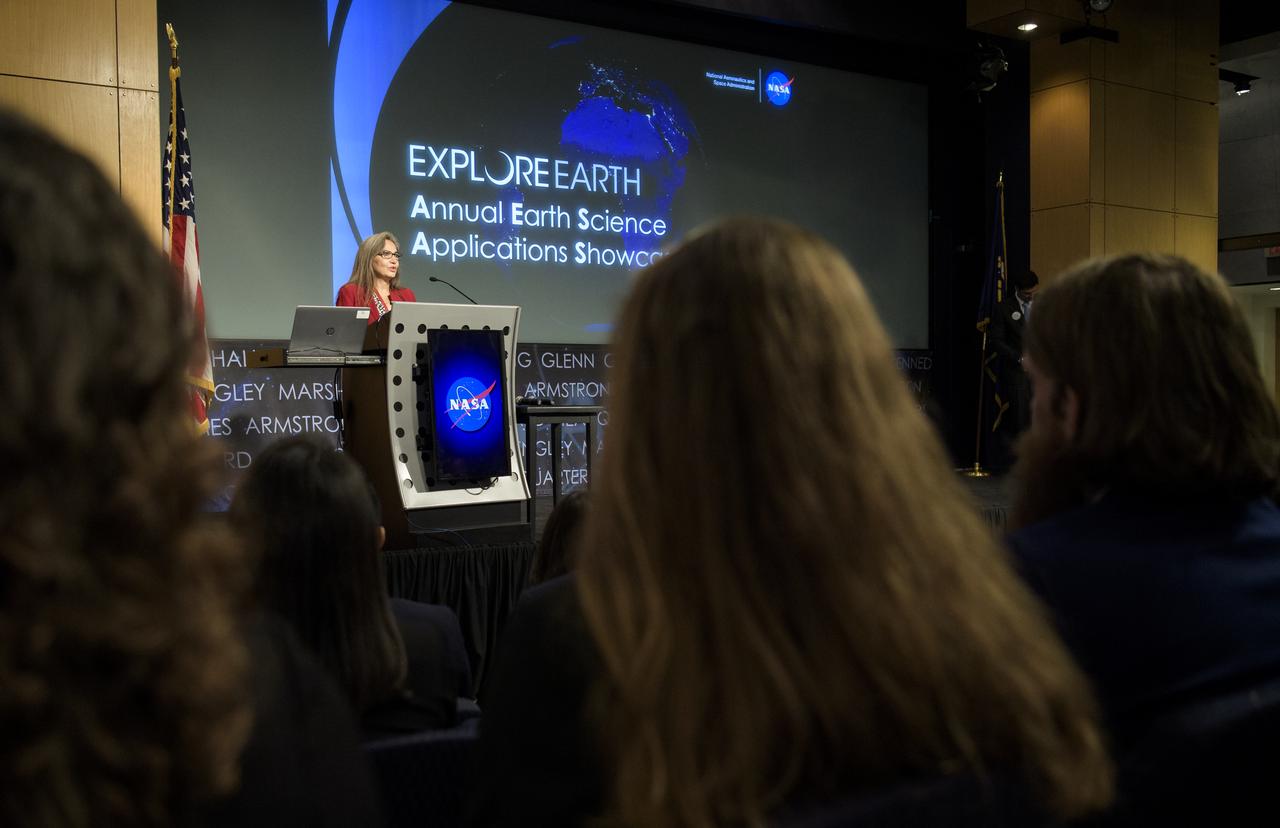
Sandra Cauffman, acting Director of the Earth Sciences Division of the Science Mission Directorate at NASA Headquarters, speaks during the 2019 Annual Earth Science Applications Showcase, Thursday, Aug. 1, 2019 at NASA Headquarters in Washington, DC. Every summer students and young professionals from NASA’s Applied Sciences’ DEVELOP National Program come to NASA Headquarters and present their research projects. DEVELOP is a training and development program where students work on Earth science research projects, mentored by science advisers from NASA and partner agencies, and extend research results to local communities. Photo Credit: (NASA/Joel Kowsky)
Credit: NASA/Joel KowskyView source item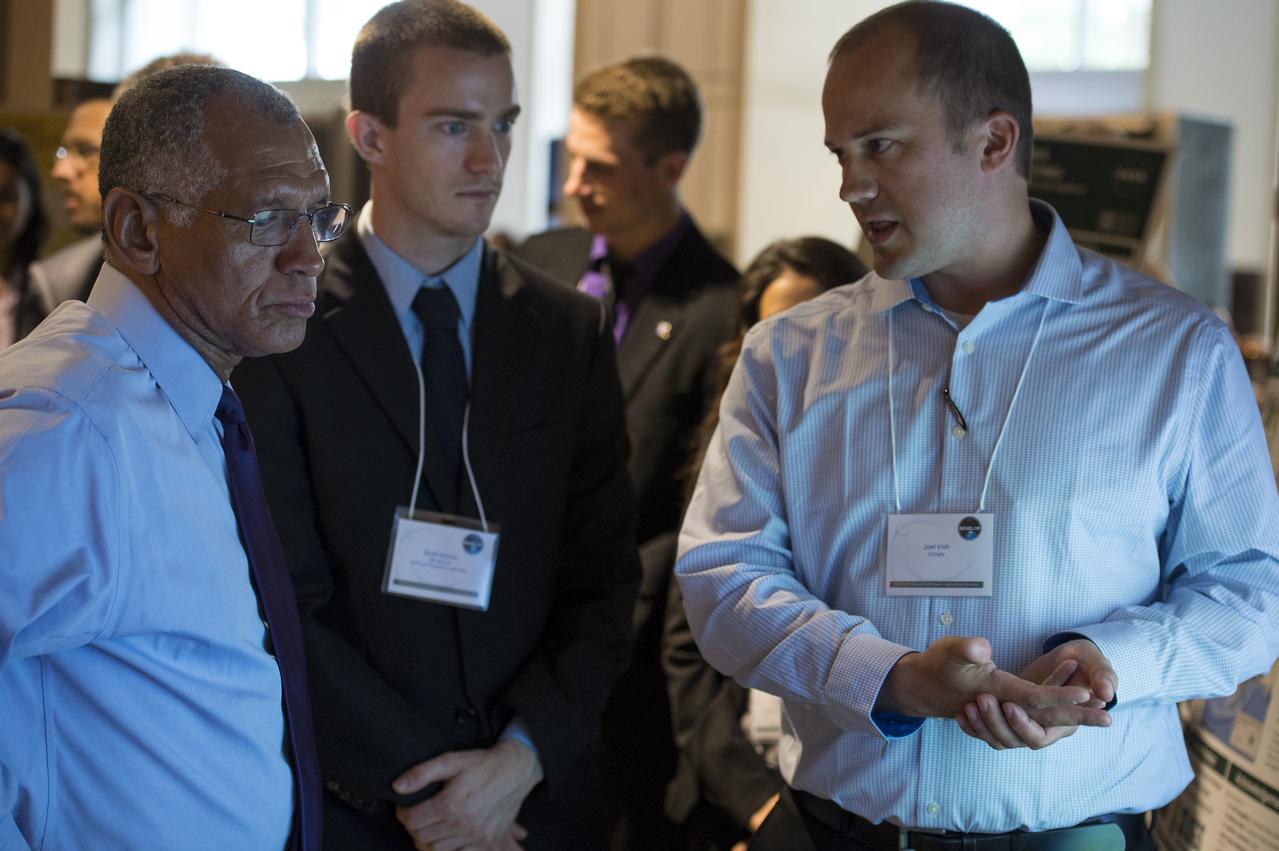
NASA Administrator Charles Bolden speaks with young professionals about their project during the annual DEVELOP Earth Science Application Showcase at NASA headquarters Tuesday, August 5, 2014. The Earth Science Applications Showcase highlights the work of over 150 participants in the 10-week DEVELOP program that started in June. The DEVELOP Program bridges the gap between NASA Earth science and society, building capacity in both its participants and partner organizations, to better prepare them to handle the challenges that face our society and future generations. Photo Credit: (NASA/Aubrey Gemignani)
Credit: NASA/Aubrey GemignaniView source item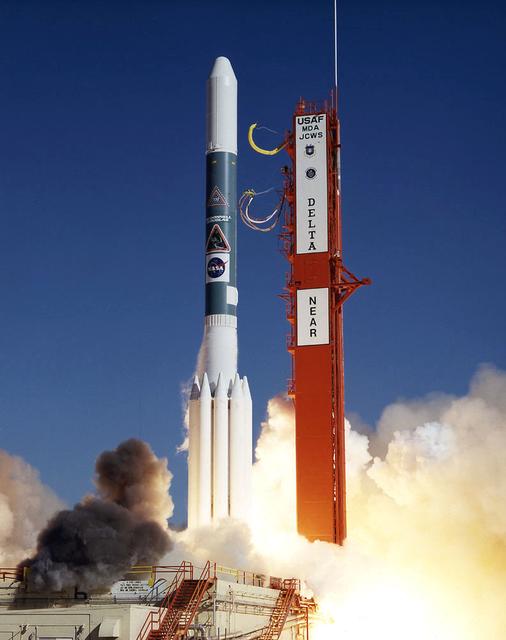
The Near Earth Asteroid Rendezvous (NEAR) spacecraft embarks on a journey that will culminate in a close encounter with an asteroid. The launch of NEAR inaugurates NASA's irnovative Discovery program of small-scale planetary missions with rapid, lower-cost development cycles and focused science objectives. NEAR will rendezvous in 1999 with the asteroid 433 Eros to begin the first long-term, close-up look at an asteroid's surface composition and physical properties. NEAR's science payload includes an x-ray/gamma ray spectrometer, an near-infrared spectrograph, a laser rangefinder, a magnetometer, a radio science experiment and a multi-spectral imager.
academic journal of the American Association for the Advancement of Science
License: CC0View original sourcesystematic study of the world through testable explanations, empirical evidence, and independent verification
License: CC0View original sourcehigher-education institution in Paris, France
Also known as: Sciences Po Undergraduate CollegeLicense: CC0View original source